Salt-Based Water Softeners vs. Salt-Free Conditioners
Salt-based water softeners remove hardness minerals through ion exchange, while salt-free conditioners change how minerals form scale without removing them. PlumbingAuburnwa.info uses your water goals, plumbing needs, and maintenance preferences to guide the comparison.
Request an Estimate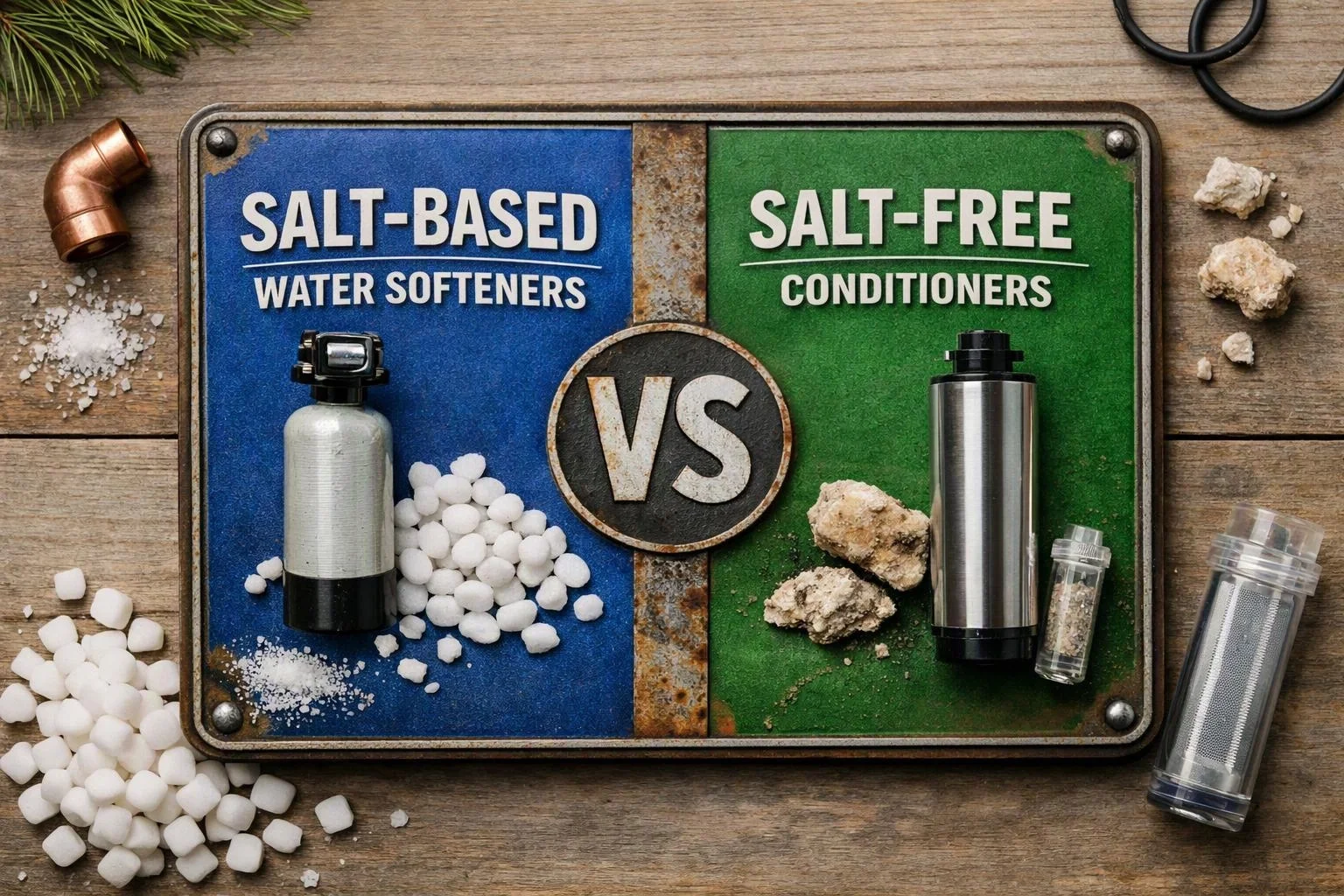
What’s the Difference Between Salt-Based and Salt-Free Systems?
Salt-based water softeners remove hardness minerals, while salt-free conditioners reduce scale without removing those minerals.
A salt-based water softener treats hard water through ion exchange. The process changes the mineral content that causes water hardness and scale formation.
A salt-free water conditioner leaves calcium and magnesium in the water. Instead, the system changes how those minerals behave on plumbing surfaces. The better choice depends on whether your main goal is hardness removal or scale control.
How Does a Salt-Based Water Softener Work?
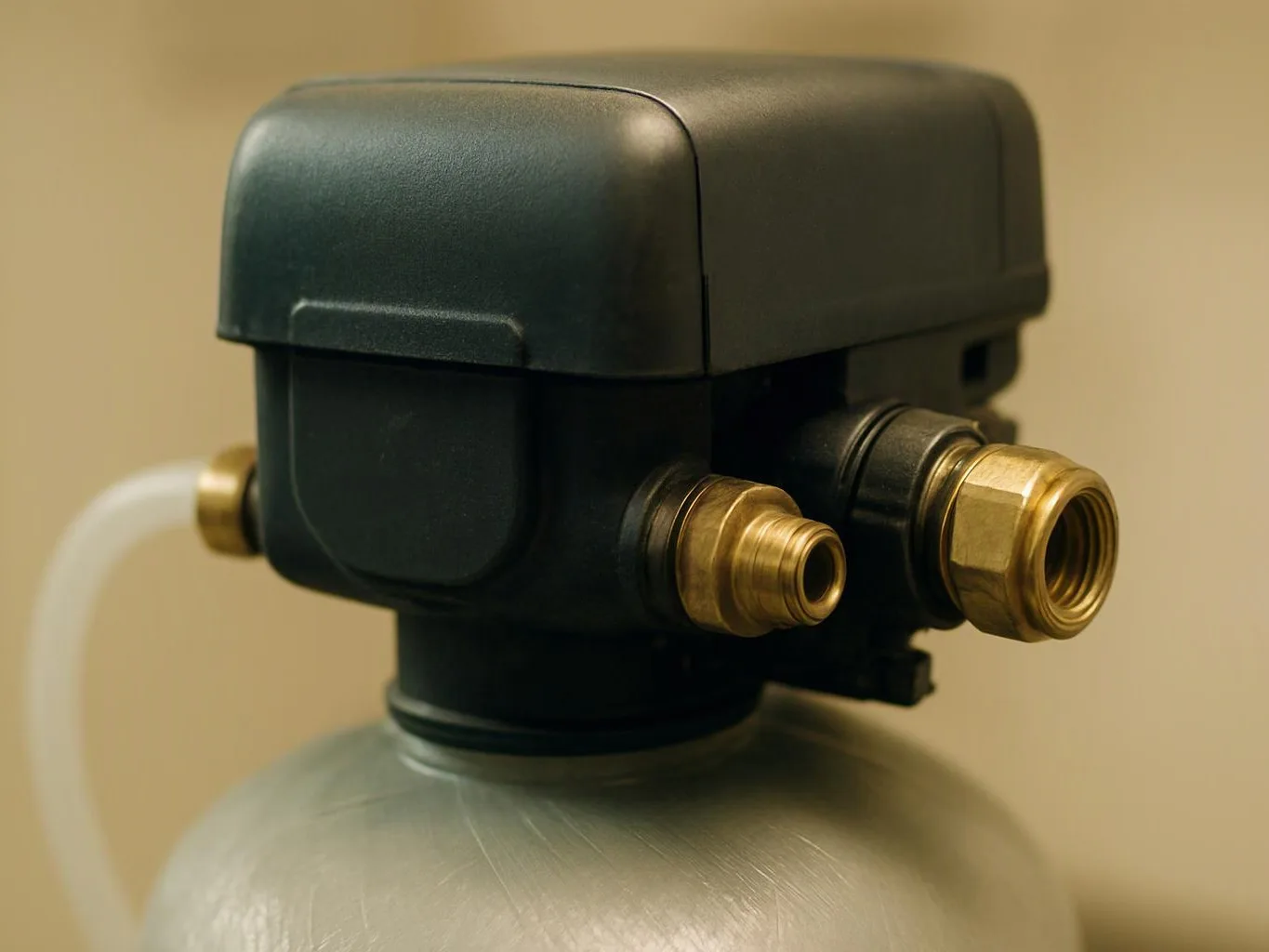
An ion exchange water softener is a treatment system that replaces calcium and magnesium with sodium ions.
Water flows through a resin tank filled with small treatment beads. The resin attracts calcium and magnesium, then releases sodium ions into the treated water.
The system eventually needs a regeneration cycle. During regeneration, water and salt solution move through the resin to restore its treatment capacity. A brine tank stores the salt solution used for this process.
Water hardness, household water use, and system capacity affect how often regeneration occurs. Our team reviews those factors during water softener installation so the equipment matches the plumbing system.
How Do Salt-Free Water Conditioners Work?
A salt-free water conditioner is a scale-control system that changes mineral behavior without removing hardness from water.
Many salt-free systems use template-assisted crystallization. Specialized media encourages scale-forming minerals to form stable microscopic crystals in the water.
Those crystals are less likely to attach to plumbing surfaces. The water chemistry remains largely unchanged, so calcium and magnesium still pass through the plumbing system.
Salt-free conditioning can reduce scale buildup, but it doesn't create soft water. It also doesn't provide the same hardness removal as an ion exchange softener.
Salt-Based vs. Salt-Free Water Treatment at a Glance
The comparison below focuses on the result each system provides. Your water test and household goals should guide the final selection.
| Consideration | Salt-based softener | Salt-free conditioner |
|---|---|---|
| Hardness removal | Removes calcium and magnesium through ion exchange. | Doesn't remove hardness minerals. |
| Scale reduction | Reduces the minerals that create scale. | Changes mineral behavior to limit scale formation. |
| Water feel | Can change the feel of water because hardness is reduced. | Usually keeps the original mineral feel of the water. |
| Salt use | Uses salt for the regeneration cycle. | Doesn't use salt for conditioning. |
| Drain connection | Usually needs a drain connection for regeneration. | Often has fewer drain requirements, depending on the design. |
| Maintenance | Requires salt management and system checks. | Usually has simpler media and maintenance needs. |
| Drinking water | Changes the mineral balance of treated water. | Keeps hardness minerals in the water. |
| Appliance protection | Supports protection by removing hardness minerals. | Supports protection by reducing scale attachment. |
Both systems can support appliance protection, but they do so in different ways. Plumbing compatibility, water chemistry, and maintenance preferences also matter.
When Might You Need Both Systems Together?
Using both systems can make sense when a household needs hardness removal and additional scale control.
Our team reviews the water test, plumbing layout, and household water goals before recommending whole-house water treatment.
How Can the Two Systems Work Together?
The treatment sequence depends on water chemistry, plumbing compatibility, and the result you want.
Our team plans the equipment locations and connections before installation. That planning helps control maintenance needs and ongoing operating cost.
Which System Fits Your Water and Household Needs?
A salt-based softener fits households that need hardness removal, while a salt-free conditioner fits households focused on scale control and lower maintenance.
A water hardness test provides the starting point. Our team also reviews household water use, appliance protection goals, skin and hair concerns, and salt-free preferences.
Drain access and maintenance needs can affect the practical choice. A professional water treatment assessment helps match system capacity and plumbing connections to the home.
What Does a Water Treatment Quote Include?
A water treatment quote should reflect the water test, system type, installation conditions, plumbing changes, and ongoing maintenance needs.
Our team reviews water hardness and system capacity before preparing a quote. We also check the installation location, plumbing connections, drain requirements, and electrical requirements.
The quote should explain the selected equipment and the work needed to connect it to the plumbing system. It should also identify expected maintenance needs so you can compare the operating requirements clearly.
To obtain an exact quote, contact our team for a water treatment assessment. The final recommendation depends on your water quality, household use, and installation conditions.
How We Evaluate Water Softening Equipment
PlumbingAuburnwa.info evaluates water softening equipment by matching water quality, system capacity, and plumbing conditions.
Choose the Right Water Treatment Approach
The right approach starts with your household water goals and a professional plumbing assessment.
Our team can help you compare water softener installation with salt-free water conditioning. We look at hardness removal, scale control, maintenance, and plumbing compatibility together.
For equipment selection and installation planning, visit our water softening equipment supplier service page. Contact our team when you’re ready to discuss your water treatment assessment.