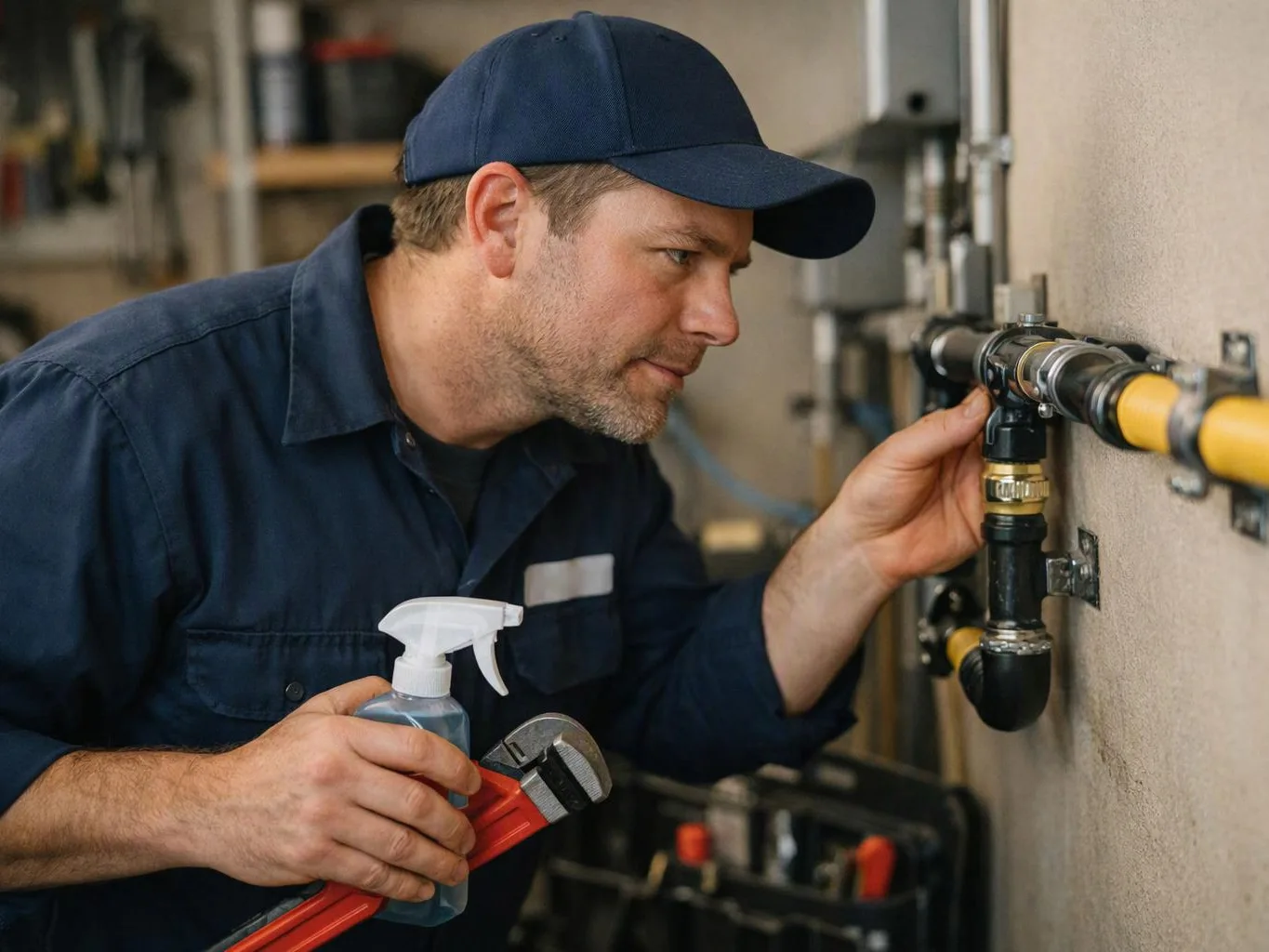
Tankless vs. Tank Water Heaters: Comparing the Trade-Offs
Tankless water heaters save space and heat water on demand, while tank water heaters store ready-to-use hot water. PlumbingAuburnwa.info compares capacity, installation needs, maintenance, and household fit so you can choose with confidence.
Request an EstimateHow Do Tankless and Tank Water Heaters Differ?
Tank water heaters store heated water in a tank, while tankless water heaters heat water as it flows through the unit.
A tank water heater uses a storage tank, burner, or heating element to keep water hot. A thermostat controls the stored water temperature, and a temperature and pressure relief valve supports safe operation.
A tankless water heater is an on-demand water heating system. Water passes through a heat exchanger, which warms it as fixtures call for hot water.
Tank systems provide stored hot water during use. Tankless systems reduce standby heat loss because they don't keep a full tank hot between uses.
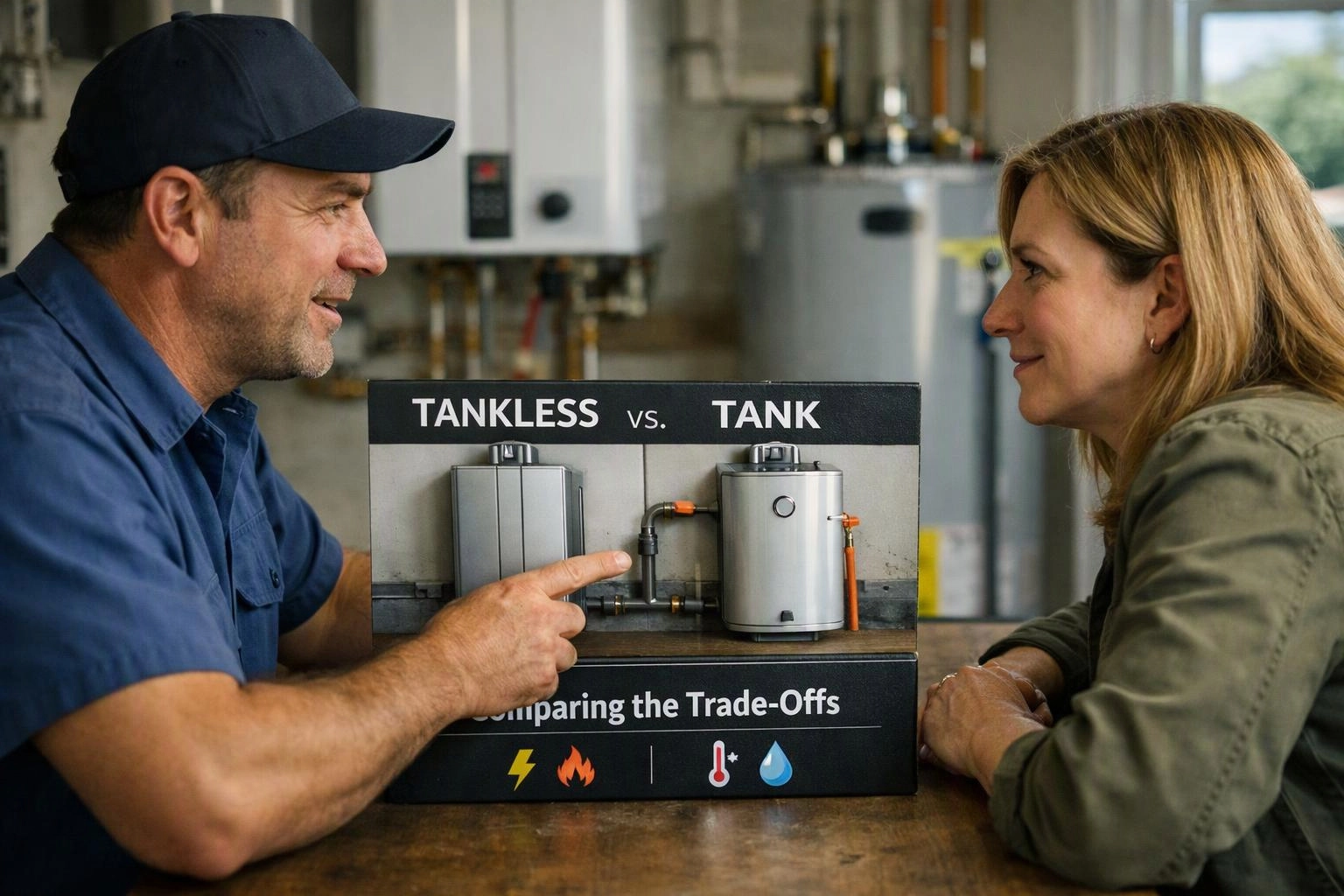
Tankless vs. Tank Water Heaters at a Glance
The right water heater depends on household demand, available space, and the existing plumbing system. This comparison shows the main trade-offs before a replacement decision.
| Factor | Tankless water heater | Tank water heater |
|---|---|---|
| Hot water capacity | Depends on unit capacity, flow rate, and temperature rise. | Depends on storage capacity and recovery. |
| Energy use | Heats water during demand and limits standby heat loss. | Uses energy to keep stored water hot between uses. |
| Space requirements | Usually needs less floor space but requires suitable wall placement. | Needs floor space for the tank and service access. |
| Installation complexity | May need changes to gas, electrical, venting, and drainage systems. | Often works with established connections when the replacement type matches. |
| Maintenance | Needs regular checks for scale buildup and safe operation. | Needs checks for sediment, leaks, valves, and burner or heating element operation. |
| Lifespan | Can support long-term use when maintained and matched to the water conditions. | Depends on tank condition, water quality, maintenance, and equipment design. |
| Recovery | Provides on-demand heating within the unit's flow limits. | Reheats stored water after demand uses the available supply. |
Neither design fits every home. A proper comparison connects the equipment to real fixture demand and site conditions.
What Are the Main Trade-Offs of Each Water Heater?
Energy efficiency is a key tankless benefit because the unit heats water only during demand. A tank water heater can lose heat while stored water waits for use.
Tankless units can provide continuous hot water when the flow rate and temperature rise stay within the unit's limits. A tank system offers stored hot water, but heavy use can exceed its storage capacity before recovery is complete.
Tankless equipment often has greater upfront installation needs. Tank equipment may offer simpler replacement compatibility when the fuel connection, venting, water connections, and location already match.
Maintenance also differs. Tankless systems need attention to scale buildup and water flow, while tank systems need checks for sediment, leaks, and safe relief-valve operation.
When a Tankless Water Heater May Fit Better
A tankless water heater may fit better when limited utility space and long hot water demand shape the decision.
Our team checks the usage pattern before recommending a gas tankless water heater or electric tankless water heater. The right fit depends on more than the unit's compact size.
When a Tank Water Heater May Fit Better
A tank water heater may fit better when established plumbing and stored hot water support a straightforward replacement.
Stored hot water can help with simultaneous demand when the tank has enough capacity and recovery. A conventional water heater can also provide strong replacement compatibility when the existing fuel connection and installation location remain suitable.
Our team checks the fuel connection, water connections, venting, and available space before selecting a gas tank water heater or electric tank water heater. A replacement should match the home's service conditions, not only the old equipment's appearance.
Can a Tankless Water Heater Run Multiple Showers at Once?
A tankless water heater can serve multiple showers when its flow capacity matches the combined demand and required temperature rise.
Multiple showers increase fixture demand and total water flow. Incoming water temperature also affects the temperature rise the unit must provide.
Our team checks the expected simultaneous use, fuel supply, water pressure, and unit capacity. If demand exceeds the unit's limits, users may notice reduced water flow or weaker temperature control.
Does a Tankless Water Heater Need a Different Installation?
Yes, a tankless water heater often needs different gas, electrical, venting, drainage, and mounting provisions than a tank unit.
A gas model may need a suitable gas line and a properly sized vent. A condensing tankless unit may also need a drain for condensate, while a non-condensing unit uses different venting requirements.
An electric model may need a dedicated electrical circuit and enough panel capacity. All models need correct water connections, secure mounting, and code compliance.
Our team evaluates the gas connection, electrical connection, venting path, drain, water lines, and installation location. Gas and electrical work can create serious hazards, so licensed workers should handle regulated installation work.
When Do Water Heater Installation and Replacement Work Together?
Water heater installation and water heater replacement work together when the new equipment changes the home's existing setup.
These conditions make replacement more than a simple equipment swap. Our team plans the installation work around the home's fuel supply, plumbing, and safety requirements.
How Do Installation and Replacement Work Together?
Water heater installation and replacement work together through a planned sequence that connects equipment selection to site conditions.
Our team starts with a site assessment and reviews household demand, existing plumbing, fuel supply, and installation space. We then select equipment that matches the water flow, temperature rise, venting path, and electrical needs.
Our crew removes the existing unit, completes the connection work, and addresses venting or drainage changes. We test the system and review the quote scope so the planned work is clear before installation begins.
Our Water Heater Installation service connects these steps into one coordinated project.
The Main Steps We Use to Plan the Change
Our team keeps the plan focused on safe operation and practical replacement compatibility. Gas, electrical, venting, and code work should be handled by licensed workers.
What Changes the Cost of This Water Heater Project?
Water heater project cost depends on the unit, site changes, fuel connections, venting, electrical work, removal, and inspection needs.
Equipment choice affects the project because tankless and tank systems use different installation requirements. Labor scope can increase when the project includes gas line work, electrical upgrades, venting changes, drain installation, or relocation.
Permit and inspection requirements can also shape the work. Our quote scope explains the selected equipment, removal, connection work, site changes, testing, and required compliance steps.
To obtain an exact quote, contact our team with details about the current water heater, fuel type, installation location, and household hot water demand.
How Should You Choose Between a Tankless and Tank Water Heater?
Choose a tankless water heater for on-demand heating and compact placement, or choose a tank water heater for stored hot water and simpler replacement compatibility.
Start with household size and peak hot water demand. Then consider available space, fuel type, installation condition, maintenance expectations, and long-term operating needs.
A tankless system may suit a home that values lower standby heat loss and compact placement. A tank system may suit a home that needs stored hot water and has compatible plumbing already in place.
Our team can compare the options against water flow, temperature rise, water pressure, venting, drainage, and electrical capacity. The best choice is the system that fits both daily use and the installation site.
How We Check the Right Water Heater Setup
Our team checks water demand, existing plumbing, fuel supply, electrical service, venting, drainage, and code requirements before recommending a setup.
We review the home's water pressure and fixture demand to understand the needed flow rate and temperature rise. We also inspect the installation location for access, mounting, connections, and safe service space.
Our crew checks the gas supply, electrical panel, venting route, and drainage plan. We use the code and inspection criteria that apply to the planned water heater installation or replacement.
Warning signs include leaking tanks, unstable temperatures, unusual burner sounds, damaged venting, repeated shutoffs, or visible corrosion. Stop using equipment that appears unsafe and contact our team for a professional assessment.
Questions About Choosing a Water Heater
Which water heater is easier to replace?
A tank water heater is often easier to replace when the new unit matches the existing fuel connection, venting, plumbing, and location.
What happens when a tankless water heater cannot meet demand?
A tankless water heater may provide less water flow or weaker temperature control when fixture demand exceeds unit capacity.
Do tankless water heaters need regular maintenance?
Yes, tankless water heaters need regular maintenance to check scale buildup, water flow, temperature control, and safe operation.
Can an older home support a tankless water heater?
Yes, an older home can support a tankless water heater when its gas supply, electrical service, venting, water connections, drainage, and installation space meet the unit's requirements.
What should be checked before replacing a water heater with a different type?
Our team checks household demand, fuel type, gas or electrical capacity, venting, drainage, water pressure, installation space, and code compliance before changing water heater types.