Water Heater Repair vs. Replacement: Compare Your Options
Water heater repair usually fits isolated, fixable problems, while replacement makes more sense when damage is severe or the system no longer meets your needs. At PlumbingAuburnwa.info, we check the heater, compare both paths, and explain what our quote includes.
Request an EstimateOptions at a Glance
Water heater repair and water heater replacement serve different needs. The right choice depends on the failed component, tank condition, fuel type, and household hot water demand.
Water Heater Repair vs. Replacement at a Glance
Water heater repair usually has a lower immediate cost, while replacement can offer better long-term reliability when the existing system has major damage or poor efficiency. Our comparison focuses on the fault, system condition, installation needs, and future maintenance.
| Option / System | Best For | Typical Lifespan / Turnaround | Key Trade-Offs |
|---|---|---|---|
| Repair | A defined failure in a sound water heater | Usually a shorter service process when parts are available | Lower immediate cost, but older components may fail later |
| Replacement | Tank failure, extensive corrosion, or poor system fit | Depends on equipment, access, connections, and installation requirements | Higher immediate cost, with potential gains in reliability and efficiency |
1. Repair a Defined Component Failure
A component repair fits a water heater when the tank remains sound and the failed part is serviceable. This option is best for a clear fault that does not involve broad corrosion or structural tank damage.
2. Replace a Damaged Tank System
A replacement water heater fits when the tank leaks, corrosion is extensive, or breakdowns keep returning. Replacement is best when the existing system no longer provides reliable hot water or suitable energy efficiency.
3. Change the System Type or Fuel
A system change can move beyond like-for-like replacement when the home supports different installation requirements. A tank water heater, tankless water heater, gas water heater, and electric water heater each need a suitable space, fuel source, and connection setup.
What Decides Between Water Heater Repair and Replacement?
Water heater condition, damage type, operating needs, and future reliability decide whether repair or replacement fits better.
A leak does not always mean the same thing. A leak from a replaceable connection or valve may support repair, while a tank leak can point to tank failure. Corrosion, rust, sediment, system age, and energy efficiency also shape the decision.
Fuel type affects the repair path and any replacement plan. We also review the manufacturer warranty before recommending replacement parts or a new system.
For help with an isolated fault, our Water Heater Repair service addresses the cause and explains the available options.
Advantages of Repairing a Water Heater
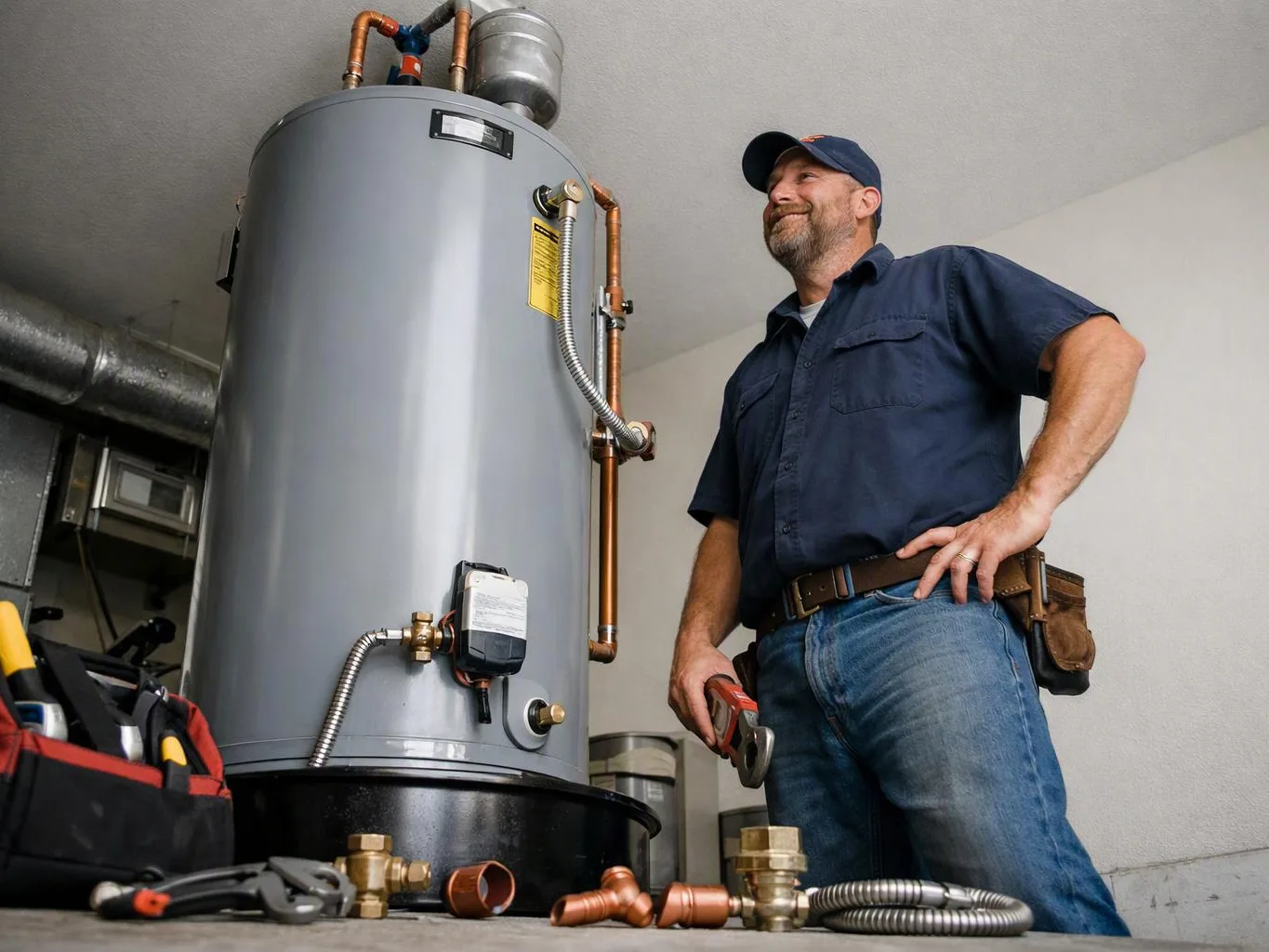
Water heater repair is useful when the main tank remains in good condition. Our team tests the failed part and checks whether the repair supports dependable operation.
Best for: a sound water heater with an isolated, repairable component failure.
When Repair Is the Better Fit
Repair is the better fit when an isolated component failure causes the problem and the tank remains repairable. A minor leak from a serviceable part may support repair after our team confirms the leak source.
Thermostat, heating element, and pressure relief valve problems can often be evaluated as separate component issues. Our crew checks the condition around the fault before we define the repair scope.
Advantages of Replacing a Water Heater
Water heater replacement is useful when the existing system has major damage, poor fit, or repeated reliability problems. A new water heater can also support better capacity and energy efficiency when the system is chosen carefully.
Best for: a water heater with a tank leak, extensive corrosion, repeated failures, or changing household needs.
When Replacement Is the Better Fit
Replacement is the better fit when a tank leak, extensive corrosion, or repeated breakdowns affects long-term reliability. Our team also considers whether the current capacity, fuel source, and installation requirements still fit the household.
A replacement water heater may need new venting, gas line work, electrical connections, or other installation changes. We explain those requirements before we define the quote scope.
Is the New System Like-for-Like?
A replacement can match the existing type and fuel, or it can change the system when the home and installation requirements support that choice.
A like-for-like plan may keep a tank water heater, gas water heater, or electric water heater. A different plan may use a tankless water heater or change the fuel source.
Fuel conversion requires careful review of venting, gas line capacity, electrical service, space, and system capacity. We do not treat a fuel change as a simple equipment swap.
What Changes the Cost of This Water Heater Decision?
Water heater cost depends on the failed part, damage extent, access, system type, fuel connections, installation changes, and required equipment.
Repair cost drivers can include parts, labor, leak diagnosis, and access to the water heater. Replacement cost drivers can include the new system, installation access, venting, gas line work, electrical connections, drain pan, expansion tank, fuel conversion, and permit requirements.
Our quote explains the recommended work and the included installation scope. Requesting a quote gives us the details needed to compare repair and replacement for your home.
How We Compare Repair and Replacement Options
Our water heater inspection connects the visible problem to the system’s condition and operating needs. We use the findings to explain the quote scope clearly.
How to Choose Between Repair and Replacement
Choose the option that fits the system condition, household demand, installation requirements, and warranty coverage. Our team can explain the trade-offs before work begins.
Which Water Heater Option Fits Your Home?
Water heater repair fits a sound system with a defined, serviceable fault, while replacement fits major damage, repeated failures, poor fit, or changing household needs.
Household hot water demand, available space, fuel source, energy efficiency goals, warranty terms, and future maintenance all affect the choice. Our team compares those factors with the condition we find during inspection.
What Does Each Water Heater Warranty Cover?
A water heater warranty may cover the tank, parts, labor, or installation separately, so the written terms must be checked before choosing repair or replacement.
A manufacturer warranty may cover eligible replacement parts or the tank. Labor coverage and installation warranty terms can follow separate rules, and exclusions may apply when maintenance requirements are not met.
We review the available warranty information and explain how it affects the repair or replacement decision. The written warranty controls the final coverage.
Questions About Water Heater Repair and Replacement
Can a leaking water heater be repaired?
A leaking water heater can be repaired when the leak comes from a serviceable connection or component. A tank leak or extensive corrosion may require water heater replacement after inspection.
Is it worth repairing a water heater that keeps failing?
A water heater that keeps failing may be a better replacement candidate when repairs no longer provide reliable operation. Our team checks the tank, failed components, efficiency, capacity, and future maintenance needs.
Can a water heater replacement change from gas to electric?
A water heater replacement can change from gas to electric when the home supports the required electrical service, capacity, space, and installation requirements. Our team reviews those conditions before including a fuel conversion in the quote scope.
Does water heater maintenance affect warranty coverage?
Water heater maintenance can affect warranty coverage when the written manufacturer warranty lists maintenance requirements or exclusions. Review the warranty terms and keep service records for reference.
We can review the system condition, explain the repair or replacement path, and provide a quote scope for the recommended work.