Backflow Testing and Prevention: What Property Owners Should Know
Washington backflow testing requirements depend on the water purveyor, property hazard, prevention device, and required records. At PlumbingAuburnwa.info, we explain when testing, repair, or installation may be needed and how we document the work.
Request an Estimate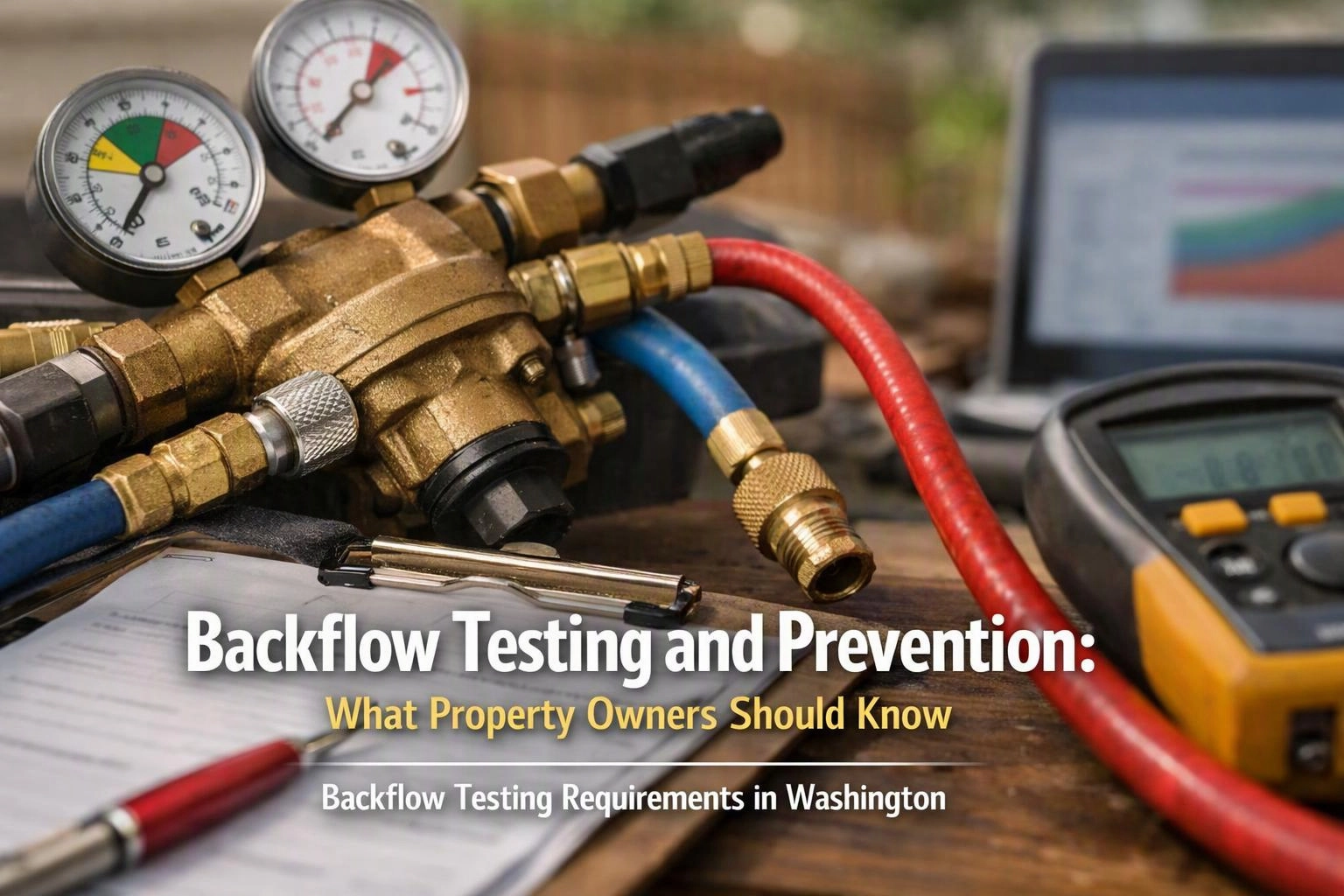
What Are Washington Backflow Testing Requirements?
Washington backflow testing requirements are set through the applicable water purveyor and depend on the property's cross-connection risk and prevention device.
A water purveyor may require a property owner to test a backflow prevention assembly and submit testing records. The required process can vary by water system, hazard level, device type, and local cross-connection control rules.
Backflow happens when water moves toward the potable water supply. A cross-connection can allow contaminants from irrigation, equipment, chemicals, or another source to enter that supply.
Why Backflow Preventers Need Regular Testing
Backflow preventers need regular testing because internal parts can wear, stick, or fail without visible warning.
Backpressure can push water into the potable system when downstream pressure rises. Backsiphonage can pull water backward when supply pressure drops.
Our team checks whether each check valve, relief valve, and shutoff valve responds as required. An annual testing requirement may apply when the water purveyor classifies the assembly or property as needing recurring protection.
When Do Property Owners Need Testing After Installation or Repair?
A new, repaired, replaced, or relocated backflow assembly may need testing before it protects the water system or returns to service.
Our certified backflow tester follows the water purveyor's requirements and records the assembly information. The work may also need review after a water service change or major plumbing repair.
Which Properties May Need Backflow Protection?
Backflow protection may be needed wherever a connection could put the potable water supply at risk.
The water purveyor usually considers the connection, the substances involved, and the level of possible harm. Our team can review the plumbing layout and identify where a testable assembly may be required.
When Do Backflow Testing and Device Installation Work Together?
Backflow testing and backflow prevention device installation work together when a property needs new protection or an existing assembly cannot pass testing.
Our team connects the hazard review, device choice, installation, and test report. This approach helps keep the assembly suitable for the connection and the water purveyor's records complete.
How Testing and Installation Work Together
Backflow prevention follows a practical sequence that links risk review with compliance documentation.
Our team explains the condition of the assembly and the reason for each recommended step. Cost depends on the hazard, device type, access, installation work, repair needs, and required records.
What Does a Backflow Test Check?
Backflow assembly testing checks whether the check valve, relief valve, shutoff valve, and other parts hold the required pressure differential.
Our certified backflow tester uses a test gauge at the assembly test cocks. The tester records the readings and operating results in a test report.
The report connects the results to the assembly identification and device location. It can also show whether the assembly passed, needs repair, or requires replacement.
What Happens If a Backflow Test Fails?
A failed backflow test means the assembly needs evaluation, repair or replacement, and retesting before the record can be completed.
Our team explains the failed function and checks whether the device can be restored safely. We also consider access, part condition, device age, and the applicable water purveyor notice.
What Should Property Owners Keep in Their Records?
Test reports help property owners show that the backflow assembly was checked and managed correctly.
Our team can organize the information needed for the water purveyor and the property file. Keep the records with other plumbing compliance documents so future testing and service are easier to track.
| Record | Why it matters |
|---|---|
| Test report | Shows the test results and final status. |
| Assembly identification | Links the report to the correct backflow assembly. |
| Device location | Helps identify the protected connection. |
| Test date | Supports the testing schedule set by the water purveyor. |
| Tester information | Identifies the certified backflow tester who completed the work. |
| Repair record | Documents repairs, replacement work, and the follow-up retest. |
| Water purveyor notice | Shows required submissions or compliance instructions. |
How We Help With Backflow Testing and Prevention
PlumbingAuburnwa.info provides backflow testing, backflow prevention device installation, assembly inspection, and test documentation.
We review the connection, explain the test result, and identify whether repair or replacement is appropriate. Our team can also prepare a service quote based on the device, access, installation needs, and required compliance work.
Our [Backflow Testing] service supports property owners who need a clear process from inspection through retest. Contact us through our contact page to discuss the assembly and records involved.
Questions About Backflow Testing and Prevention
Can a property owner test a backflow preventer?
No, a property owner should not perform regulated assembly testing without the required certification. Our certified backflow tester checks the device and completes the test report.
How do I know which backflow device my property needs?
The required backflow device depends on the cross-connection, hazard level, water use, and water purveyor rules. We review those conditions before recommending a reduced pressure assembly, double check valve assembly, pressure vacuum breaker, or another suitable device.
Who receives the backflow test report?
The applicable water purveyor receives the backflow test report when its rules require submission. We give the property owner the completed record and explain any submission steps.
Can a backflow preventer be repaired after it fails?
Yes, a backflow preventer can often be repaired when its condition and parts support safe restoration. We determine whether device repair or device replacement fits the assembly, hazard, and water purveyor requirements, then complete a retest.
Does an irrigation system need backflow protection?
Yes, an irrigation system may need backflow protection because outdoor water can create a cross-connection with the potable water supply. The required device depends on the irrigation layout, hazard, and water purveyor rules.